

Optimize Your Wardrobe Design: 4 Key Tips for Efficient Storage
Optimal Drawer Placement
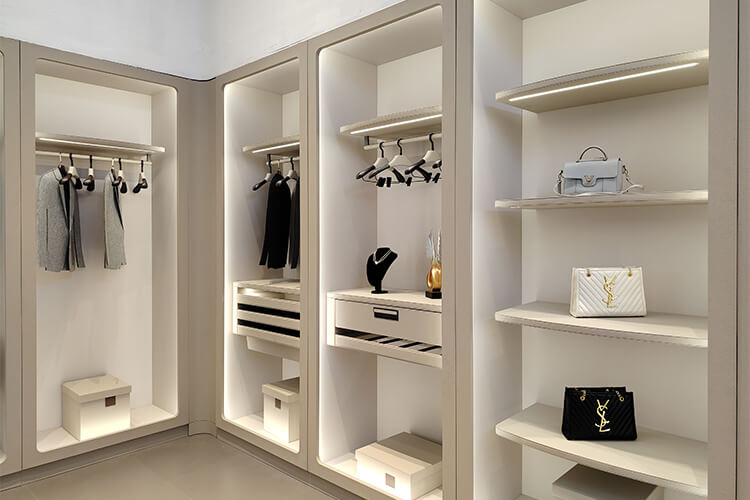
Wardrobe drawers are essential for storing smaller items like underwear and socks. Avoid placing drawers at the very bottom of the wardrobe; constantly bending down is inconvenient. Strategically position drawers for easy access to frequently used items.
Flushed Doors vs. Sliding Doors: Choosing the Right Design
The type of wardrobe door significantly impacts usability. Two popular options are flushed and sliding doors.
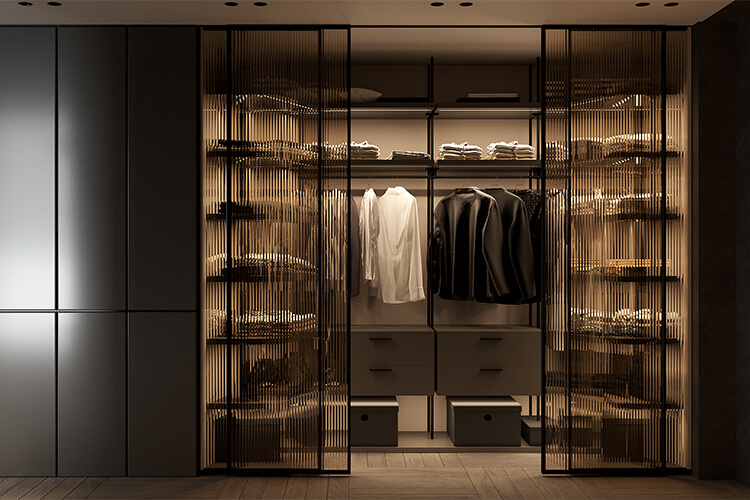
Flushed Doors: These doors open outward, offering full visibility of the wardrobe’s contents when open. Ensure sufficient space for opening without obstruction.
Sliding Doors: Sliding doors save space and are unaffected by surrounding furniture. However, they only open one section at a time, and obstructions on the tracks can impede smooth operation.
Mastering Horizontal and Vertical Compartmentalization
Internal wardrobe organization is crucial. Horizontal and vertical divisions offer distinct advantages:
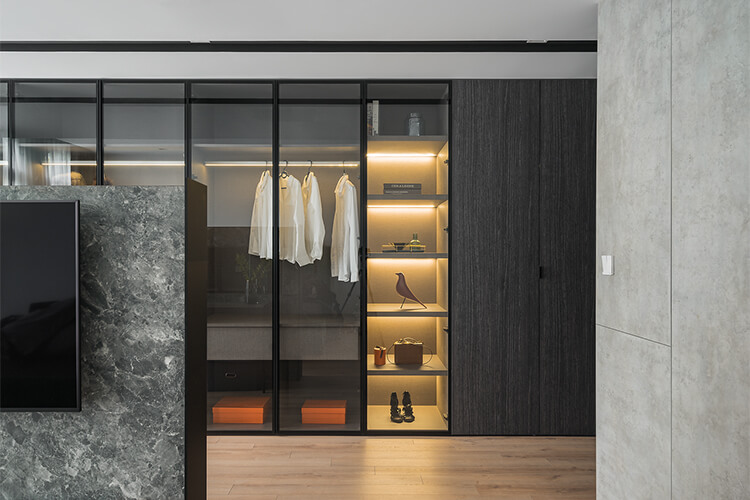
Horizontal Divisions: Maintain consistent upper and lower edges for a clean, uncluttered aesthetic.
Vertical Divisions: Dividing the wardrobe into thirds (following the golden ratio) creates a visually appealing and organized space. Maintain consistent spacing and rhythm for a minimalist feel. Designate specific compartments for different types of clothing.
The Space-Saving Magic of Built-in Wardrobes
Wardrobes can consume considerable space. A built-in wardrobe offers a solution.
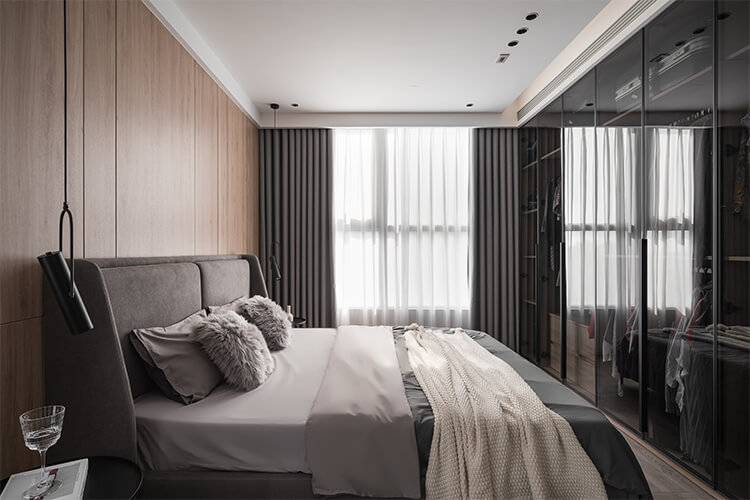
Recessed wardrobes (approximately 600mm deep) integrate seamlessly into the wall, maximizing space and creating a visually spacious bedroom.


